
Parcels and customs, followed from your phone
From choosing a shipping line to the knock at the door: what to compare, how to let tracking come to you, and what customs may ask for.
Picking a shipping line on a narrow display
Once your items are in the warehouse, you choose how the parcel travels. Agents call the options shipping lines; each has its own price per weight, delivery range and list of things it refuses. Estimate pages let you compare them before you pay.
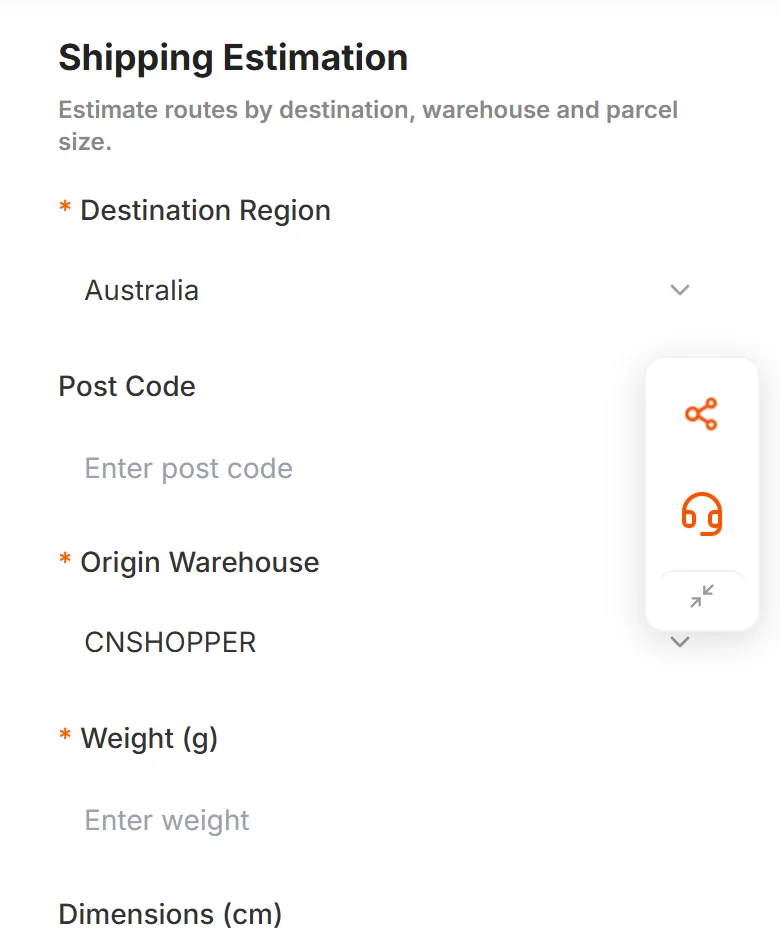
On a phone, estimate pages behave very differently. In our check CSSBuy's cost page showed results as stacked cards; LoongBuy's, LitBuy's and CNshopper's forms fitted the screen but did not give us results while signed out; Lovegobuy's started by asking what was in the parcel to estimate its weight; Superbuy's opened in Chinese. If you cannot compare lines comfortably on your phone, this is the one step worth moving to a computer.
Whatever the screen, check three things for each line you consider: whether it accepts what is in your parcel, its delivery range to your country, and how it charges for size as well as weight.
Tracking alerts that do not need the app open
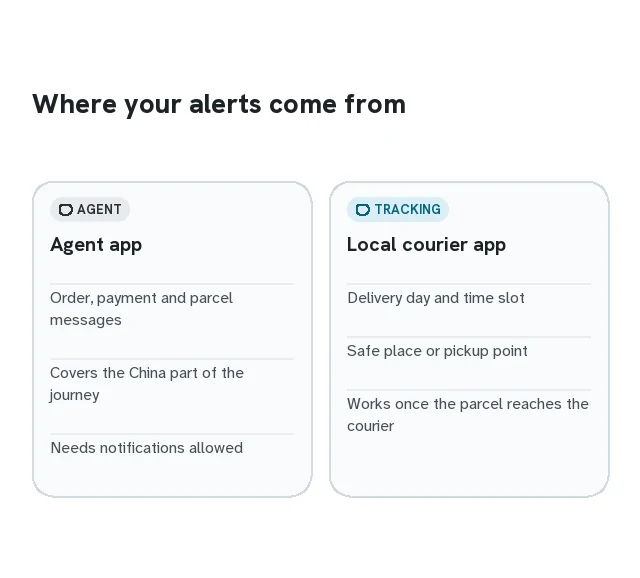
After dispatch, a tracking number appears in your agent account. From here the job is waiting, and a phone is good at waiting for you. Allow notifications from the agent app if you installed one; CSSBuy's phone site pitches its app on exactly this, real-time order and parcel notifications, and LitBuy lists app notifications for order and shipping updates among its reasons to install.
If you would rather not install another app, copy the tracking number into the app of the courier that will deliver in your country, once the parcel reaches it. Couriers usually offer delivery alerts and a way to choose a safe place or a pickup point. Agents also send messages about missing payments, extra charges or items out of stock; with notifications on, you see them the same day instead of when you next open the site. LoongBuy and the others keep the full history in your account either way.
Customs and import charges in plain terms
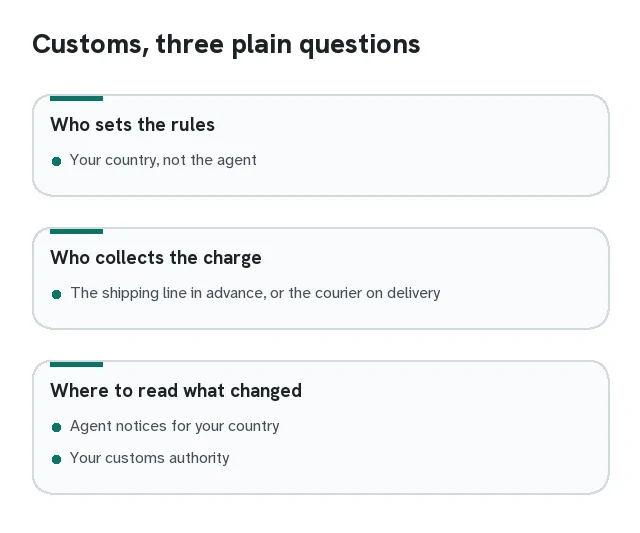
Customs is your country's check on what comes in. Depending on your country and the parcel's value, you may owe import tax, duty and a handling charge, collected either by the shipping line in advance or by the courier on delivery. The rules belong to your country, not to the agent, and they change: several regions have changed how low-value parcels are taxed during 2025 and 2026.
Read your agent's notices about your country before you ship. LoongBuy, for example, posted a notice on its phone home page about the EU's low-value parcel duty policy and the related fee adjustment, and LitBuy's phone home page carried a notice about two EU customs policies taking effect on 1 November. This guide does not advise on what to write on customs forms; the agent and your local customs authority are the right sources.
Delivery day, filmed on your phone
When the parcel arrives, check the outside before signing if the courier waits: tears, crushed corners or retaped seams. Then film the opening. Start recording before you cut the tape, keep the label in shot, and show each item as it comes out. Agents and couriers often ask for exactly this kind of evidence when something is missing or damaged, and claims usually have a deadline counted from delivery.
Compare what arrived with your order and your saved warehouse photos. If anything is wrong, open a ticket with the agent the same day, with the video and photos attached.
A parcel surcharge needs a breakdown, not a guess
A heavier final box, a volumetric calculation, a billing increment and an added service can all change a total. Compare the initial estimate with the packed parcel on the same route and date. Request the actual weight, outer dimensions, applicable divisor if any, rounding rule and separate service charges.
In a 10 June 2026 CSSBuy discussion, the author challenged a charge as volumetric; a later reply by the author reproduced a support explanation referring instead to a change from 1,969 g to 2,005 g plus an insurance adjustment. The disagreement was not independently resolved. The useful lesson is to ask what was billed before assuming which formula caused the change.